Illustration
Early warning for sick cattle, from one camera on a fence post.
Vitals learns each animal’s normal and texts you the day one starts to change. Nothing goes on the animals.
Watch. Learn. Alert.
The particle bull above is an illustration. This is the real software. The outlines, confidences and counts are live output from our detector on cattle photographs. The 14-day numbers beside them come from our simulated pen, and the video says so.
Nothing on the animals
Works on weak cell signal
One post, one outlet
The problem
Cattle hide illness until they can’t.
They’re prey animals. When a person walks up to the pen, every animal stands up and looks fine, so sick ones get found late. A camera is there when nobody else is. The early signs are small, like a bit less time at the bunk or a bit more time lying down, but they’re easy to count.
sick cattle are missed by pen riders checking by eye.
White & Renter, 2009before staff spotted it, changes in eating were already flagging sick cattle in a feedlot study.
Wolfger et al., 2015How it works
Each animal is compared to itself.
A bull that spends three hours a day at the bunk isn’t sick on a three-hour day. One that usually spends five might be. One number for the whole herd can’t see that, so Vitals learns every animal’s own normal.
It watches
The camera finds every animal in the pen, tells them apart, and counts minutes eating, drinking, lying down and moving. It all runs on a small computer at the pen.
It learns each animal
For the first week or so it learns what a normal day looks like for each one. No alerts while it learns.
It texts you
When one animal’s day breaks from its own pattern, you get a message naming it and what changed, so you know which one to go look at.
Vitals Oct 20: all quiet
- A001: eating 18%, lying 41%, at trough 22 min
- A002: eating 16%, lying 45%, at trough 19 min
- A003: eating 20%, lying 38%, at trough 25 min
A daily report with a photo of the pen, so you know it’s working.
Vitals: A002 looks off
Spent far less time at the feed bunk than his normal yesterday, and more time lying down. Worth a look today.
An alert that names the animal and what changed. Quiet days stay quiet.
The box
Everything fits on one post.
No towers, no trenching and no tags. A camera goes on a post, a weatherproof box sits beside it, and the whole thing plugs into one outlet.
Camera
An 8 megapixel zoom security camera, about 9 feet up, looking over the bunk and the water.
Computer
A small PC in a weatherproof box. It does all the watching right at the pen.
4G stick
Sends only the reports and alerts, a few megabytes a day. A weak signal is fine.
One outlet
Everything runs off one plug. An extension cord from the barn is enough.
- About $400 in parts per pen, not a device per head.
- Turns itself back on after a power cut. Nobody has to visit.
- Video stays on the ranch. Only short messages go out.
- Records every day, so any alert can be checked against what really happened.
Why not what exists
Every option today needs a person, a device or the cloud.
Pen riders
Skilled and essential, but they see the pen for minutes a day, and sick cattle act fine while someone is watching.
Ear tags and collars
Someone has to catch every animal to fit one, the cost grows with every head, and they fall off.
Camera systems
Most send video off the ranch to be analyzed, which needs a strong connection most pens don’t have.
Vitals needs none of them: nothing on the animals, one kit per pen instead of a device per head, and all the thinking happens at the pen.
Where we are
Early, and honest about it.
-
August 2026
Started building
Detection, tracking, telling animals apart, and comparing each one to its own baseline.
-
Sept to Oct 2026
Full system on real hardware
Camera to box to phone. Tested by pulling the plug, and by sending over 4G with no WiFi.
-
October 2026
First ranch pilot, Sunol, CA
One camera watching three bulls for 30 days. We installed it and read every report.
-
Next
Bigger herds
More ranches this fall and winter, including newly arrived calves, when sickness is most common.
What we haven’t proven yet.
Vitals has not yet watched a real sick animal. Three healthy bulls for 30 days may not include one. Catching a sick animal early, confirmed by a vet, is the milestone we’re working toward, and we’ll share the result either way.
We hold our own results to that standard. In August a lameness signal looked promising until we traced it to a measuring bug, so we withdrew it.
Team
Two founders. Every install by hand.
Based in the Bay Area, close to the ranches we work with.
Neil Gilani
Co-founder, software and hardware
Builds the system end to end: the vision software, the box and the alerts.
Yannai Richter
Co-founder, ranches and installs
Runs the ranch side: the ranchers, the advisors and getting boxes set up on site.
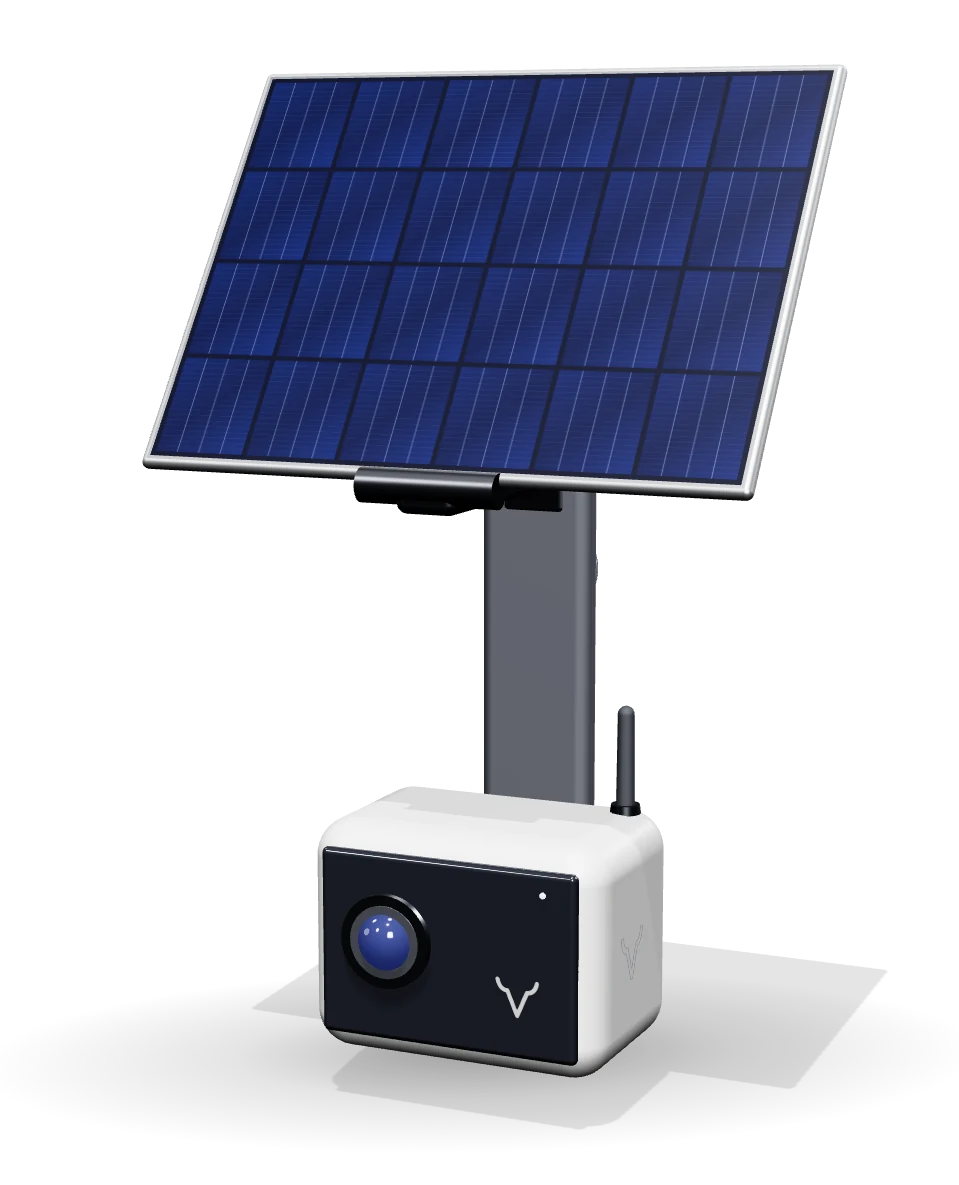
Vitals Solo
Add Vitals to your farm.
One solar camera per pen, with the AI inside it. It snaps onto a post in two minutes. No outlet, no box, no wiring, nothing on the animals.
Contact
Let’s talk.
Put one on your pen.
We install it ourselves and take it down when you’re done. You see the daily reports before you decide anything.
Add Vitals to your farmFollow the pilot.
We’re happy to walk you through the system and share what the pilot shows, good or bad.
Get in touch